Abstract
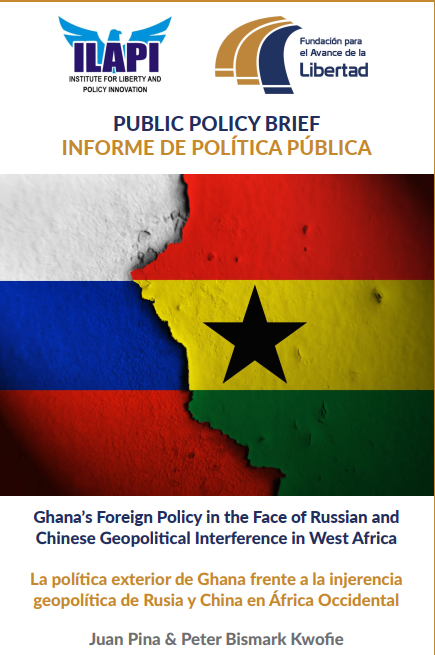
This policy brief analyses Ghana's foreign policy within the evolving geopolitical landscape of West Africa, marked by the growing influence of Russia and China and the erosion of Western security engagement in the Sahel. Recent military coups in Mali, Burkina Faso, and Niger have disrupted the post-Cold War regional order, creating an environment in which external actors are reshaping political, economic, and security dynamics. Situated at the southern edge of this instability, Ghana faces increasing pressure to safeguard its democratic system, territorial integrity, and economic interests.
The study argues that Ghana has adopted a pragmatic foreign policy framework grounded in three interrelated pillars: the protection of national borders and internal security, sustained diplomatic engagement with neighbouring military regimes, and continued commitment to regional norms under ECOWAS. This approach reflects an effort to contain instability while preventing further alignment of Sahelian states with Russia. The brief further contends that Russia's regional strategy is characterised by a transactional model of security assistance tied to resource extraction and political influence, complemented by soft-power instruments such as cultural diplomacy and educational outreach. In parallel, China's engagement operates through infrastructure financing and debt-based partnerships, generating long-term economic dependence and strategic leverage.
The findings suggest that a broader contest between competing global governance models increasingly shapes Ghana's foreign policy. As such, Ghana's role extends beyond that of a regional stabiliser to that of a pivotal actor navigating the tensions between democratic multilateralism and emerging authoritarian partnerships. Its strategic choices will have significant implications for the future of regional order, economic integration, and security cooperation in West Africa.
Click the download button to access the full policy brief document.
Be the first to review this policy brief. Share your thoughts and feedback.
No reviews yet. Check back later!
More Policy Briefs
Explore other policy briefs from ILAPI