Ghana's economic growth is often presented as evidence of improving national welfare. However, an increase in Gross Domestic Product (GDP) does not automatically mean that poverty has declined. It is crucial to remember that economic growth measures the expansion of economic activities; poverty reduction measures whether people - particularly poor and vulnerable households are experiencing meaningful improvements in their living conditions, incomes, opportunities and ability to meet basic needs.
GDP growth often tells us how much the economy has expanded, but it does not tell us who benefited from that expansion.
The growth-poverty paradox in Ghana is more a business transition problem than statistics. Despite the macroeconomic indicators are positive; the benefits of growth do not reflect in the micro economy.
Thus, the ordinary Ghanaian did not feel the impact of the recovered macroeconomic indicators because severe business regulatory barriers prevent local enterprises from scaling and creating jobs for majority of the youth.
This situation put a large proportion of Ghanaians to continually experience poverty and economic insecurity. The latest warning from the World Bank puts the contradiction into stark perspective.
At the launch of the World Bank’s 10th Ghana Economic Update on August 26, 2026, it was said that 56.4% of Ghanaians remain in poverty, despite the economy growing by 6% in 2025 and expanding by 6.4% in the first quarter of 2026.
Ghana’s employment elasticity of GDP is estimated at 0.47, meaning that every 1% increase in economic growth translates to roughly a 0.47% expansion in total employment.
While Ghana’s macroeconomic recovery has been strong - with real GDP growth hitting 6.0% in 2025 and an impressive 6.4% in early 2026 - the country faces a structural disconnect termed "jobless growth," where economic output expands without generating a sufficient volume of high-quality, formal jobs.
The World Bank also warned that the benefits of headline economic growth have not reached enough households and that spatial disparities are widening.
This raises a fundamental question: What is the value of macroeconomic growth if it does not translate into jobs, rising household incomes, expanding businesses and improved living standards of ordinary Ghanaians?
The answer requires Ghana to look beyond GDP growth and examine the structure of the economy and, particularly, the environment in which businesses operate. Growth must create economic opportunities where growth in the living condition is the focal point. Macroeconomic stability, lower inflation, fiscal discipline, investment and rising production provide the foundation for development. But growth becomes meaningful to ordinary citizens when it generates no to less economic opportunities. For most Ghanaians, the most direct pathway out of poverty is not a GDP statistic. It is productive jobs, a growing business, reliable source of income, and an opportunity to build enterprises.
A growing economy that does not generate sufficient employment for its expanding working-age population can produce impressive macroeconomic numbers while leaving and pushing citizens poorer. Notwithstanding, the focus must change to facilitating business regulatory environment that enables businesses to transition and employ.
As established in the Institute for Liberty and Policy Innovation's (ILAPI) latest research, Removing Business Regulatory Barriers for Economic Prosperity in Ghana (2026), an important explanation for why economic growth may fail to translate into broad-based prosperity was critically examined.
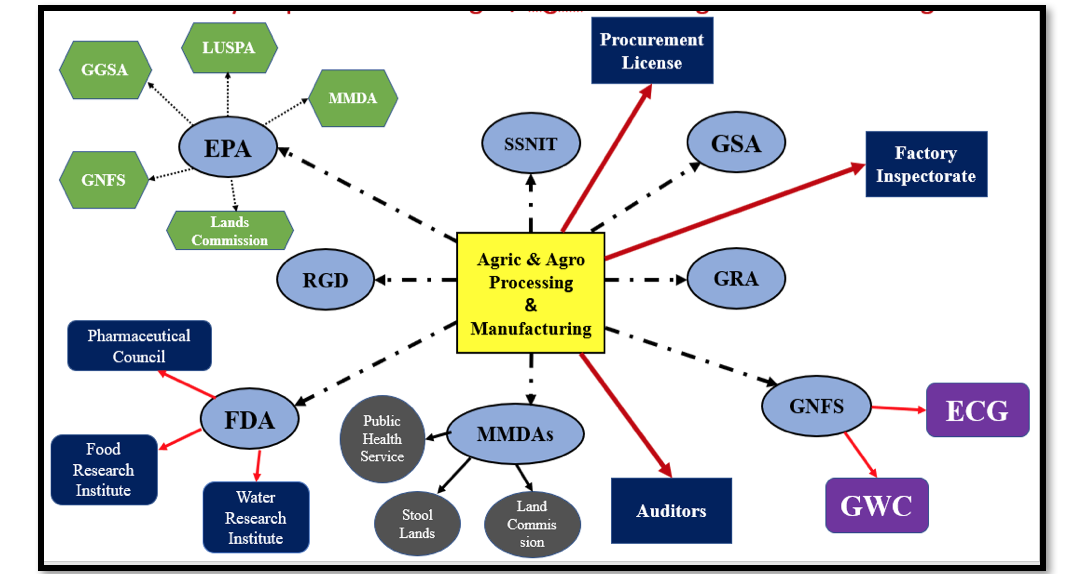
The study found that businesses face lengthy registration processes, multiple regulatory requirements, high compliance costs, overlapping institutional mandates, and limited digital accessibility. These challenges affect business growth and subsequently. Again, the study stipulated that only 28.2% of micro-enterprises transitioned to medium-sized enterprises. This shows when a small enterprise cannot grow, it cannot employ more people, and the burden will definitely be on the government.
The challenge is not a lack of government awareness of the situation, but rather implementation and political commitment to regulatory reform.
Business facilitation should become a poverty-reduction strategy. Ghana therefore needs to reposition business facilitation from a narrow investment policy to a central component of its poverty-reduction strategy.
If the objective is to make growth inclusive, policymakers must deliberately create an environment where businesses can move from micro to small, small to medium, and medium to large. That requires a regulatory framework that recognises an important economic reality that private businesses are the vehicles for employment, economic growth, and poverty reduction.
Interestingly, the government is calling for 24-hour economy, but failed to deliberately implement policies that create friendly regulatory environment for private enterprises to start and grow.
Until the government starts to see entrepreneurs are not merely as taxpayers or entities to be regulated, but as partners in national development and poverty reduction, policies will continuously undermine transition and employment.
A prosperous Ghana will not be built by macroeconomic numbers alone. It will be built when those numbers translate into businesses growth, transition, and jobs that multiply with ease.
Author:
Stephen Dansu
Senior Research and Policy Analyst
ILAPI
Reference
Institute for Liberty and Policy Innovation's (ILAPI) (2025), Removing Business Regulatory Barriers for Economic Prosperity in Ghana.
World Bank’s (2026), 10th Ghana Economic Update on August 26, 2026.