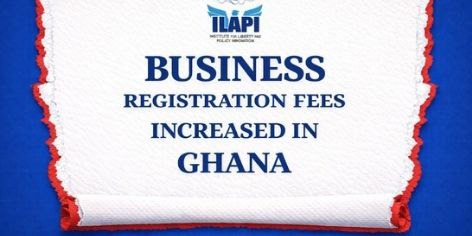
Many businesses do not fail because of poor ideas, weak management, or lack of market demand. They fail before they even begin, when choked by the high cost of acquiring business certificates and the informal charges imposed by middlemen, commonly known as “goro boys.” For a developing country that relies heavily on Micro, Small, and Medium Enterprises (MSMEs) for employment, innovation, and tax revenue, this reality is not just unfortunate; it is economically self-defeating.
Across the country, entrepreneurs particularly young people and informal businesses trying to formalize but end up facing a frustrating and expensive process to register and operationalize their businesses.
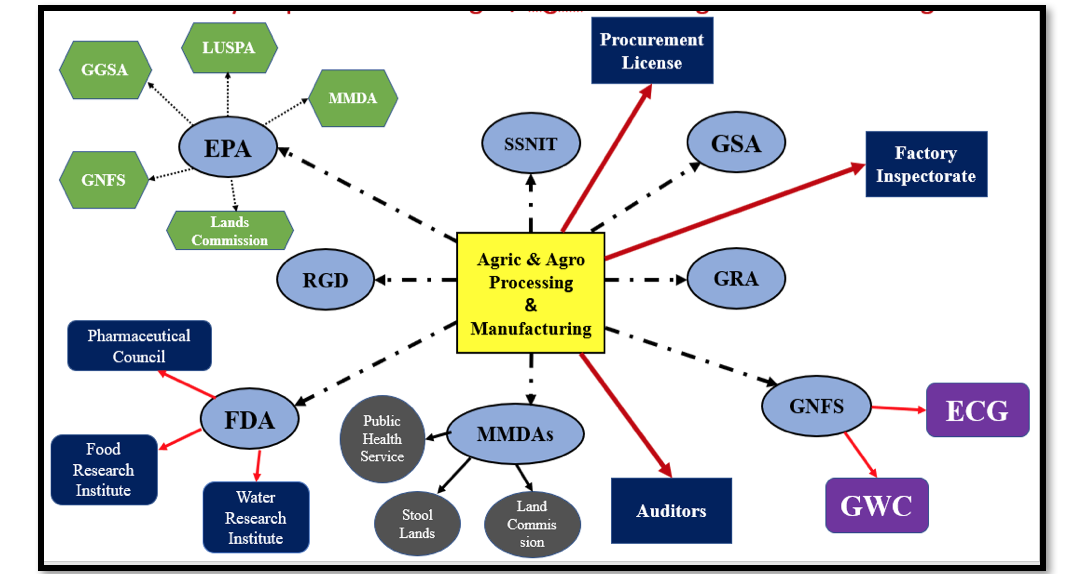
Although the official fees alone are likely not a burden for small startups, but the system is engineered by greedy individuals to frustrate, and delay MSMEs to use the services of the “goro boys”, which cost over 300% higher than the original cost.
Therefore, the more damaging cost comes from unofficial intermediaries who position themselves between entrepreneurs and regulatory institutions, charging excessive fees to “facilitate” processes that should be straightforward, transparent, and affordable. This situation disproportionately affects MSMEs, which form over 80% of businesses in Ghana and employ the majority of the workforce. Large firms can absorb these costs; small businesses cannot.
When policymakers talk about supporting local businesses, youth entrepreneurship, and industrialization, these realities must be honestly addressed.
As a result, many businesses either delay formalization, operate illegally, or shut down altogether. Others pass these costs onto consumers, increasing prices and reducing competitiveness. In all cases, the government and economy lose.
A Misplaced Policy Focus
For a developing country like Ghana, increasing the cost of doing business whether directly through higher fees or indirectly through tolerating rent-seeking intermediaries is a policy contradiction. To develop as a country, we must focus on expanding the productive base of the economy, not shrinking it.
The focus should not be on how much revenue the state can extract at the point of business entry or registration, but on how many businesses can survive, grow, and eventually contribute meaningfully through taxes, employment, and innovation.
A thousand struggling businesses paying high entry fees is far less beneficial than ten thousand thriving ones paying moderate, predictable taxes over time. This is because when the cost of compliance is too high, informalization of businesses becomes the best option.
Accordingly, when informalization increases, government loses revenue, and the country’s economic development and productivity declines.
It is critical to acknowledge that the persistence of “goro boys” is not merely a social nuisance; it is a governance failure. Their influence points to weak institutional accountability, manual processes, discretionary decision-making, and limited digital integration. Where rules are clear, procedures are automated, timelines are fixed, and payments are traceable, middlemen lose relevance.
Eradicating this problem does not require new laws as much as it requires enforcement, simplification, and transparency. Developing countries that have successfully improved their business environments such as Rwanda and Mauritius did not do so by increasing fees, but by reducing human bottlenecks and digitizing processes.
What Ghana Should Be Doing I
As a country, we must prioritize private sector–led economic growth. Thus, policy efforts must shift decisively in the following directions:
- Simplify and fully digitized business registration and certification processes, reducing face-to-face interactions that create opportunities for extortion.
- Standardize, educate, and publicize official fees clearly, so entrepreneurs know exactly what they are required to pay and nothing more.
- Strengthen monitoring and sanctions within regulatory agencies to deter staff collusion with middlemen.
- Shift revenue thinking from entry fees to growth-based taxation, allowing businesses to first survive, then scale up.
Business growth and economic development is about creating the enabling environment and allowing people to be productive and not necessarily cost increment, which places burden on MSMEs, and preclude their survival and growth.
Thus, when legitimate businesses cannot survive the cost of becoming legitimate, the economy suffers. Ghana can only industrialize, reduce unemployment, or broaden its tax base when the business entry and operational environment is less expensive and without frustrations. Together, let’s start reasoning towards reducing the cost of doing business and eliminating exploitative middlemen to enable the formulization of businesses, innovation, trust in institutions, and long-term economic resilience.
Author: Stephen Dansu
Senior Research and Policy Analyst, ILAPI