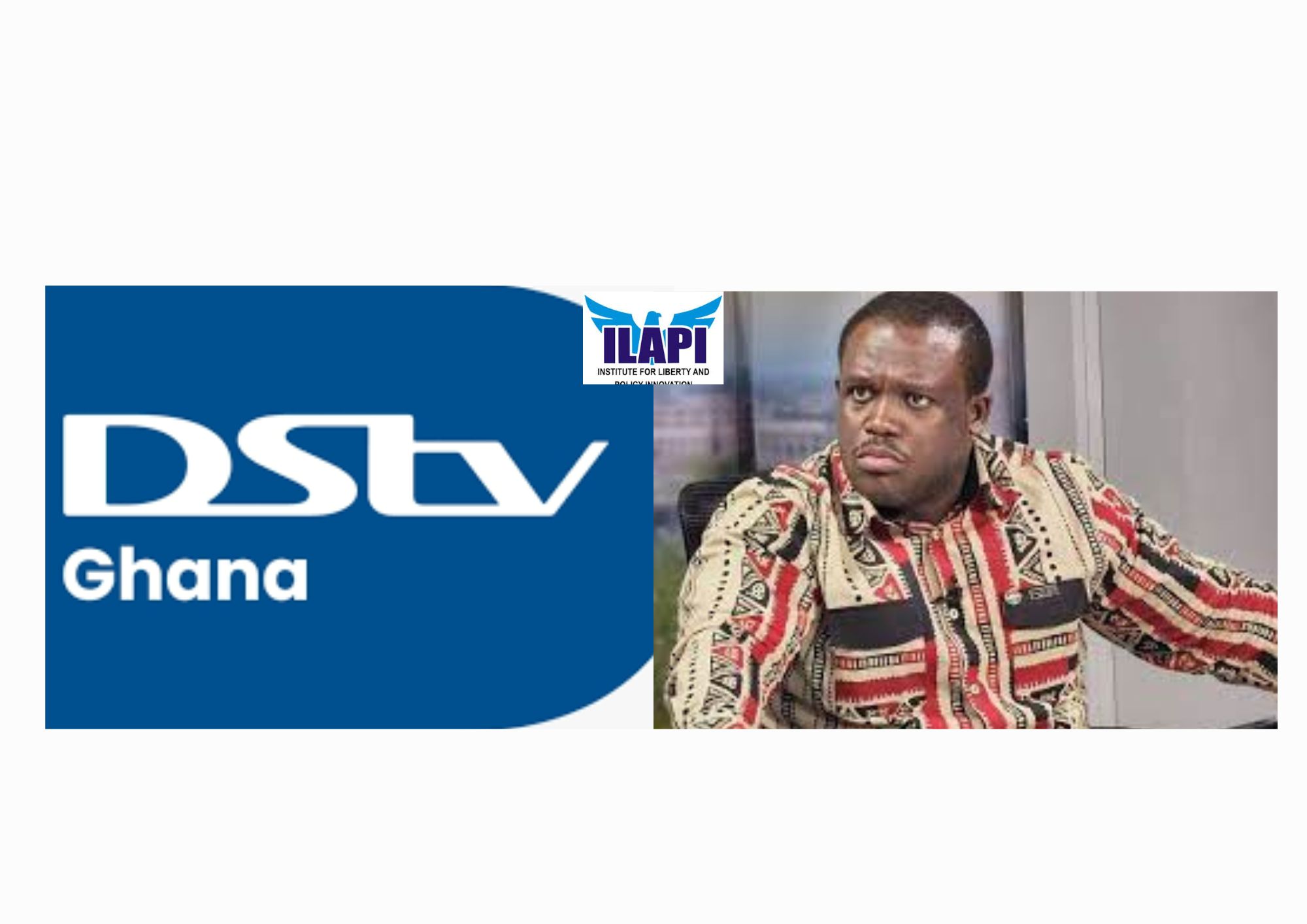
Ghana’s Minister for Communications, Hon. Sam George, has gone as far as threatening to suspend DStv’s license unless the private firm implements a 30% cut to its subscription fees.
Although the efforts to promote fair pricing are commendable, I do not condone the aggressive, confrontational, ultimatum-driven, and arguably unlawful strategy adopted by the Minister. While it seems like he’s a champion of the masses, it feels more like a populist stunt, and a political theatre designed to stir emotions rather than a sound economic strategy.
Picture this Scenario
You voluntarily walk into a luxury store at the mall, say, an Apple Store. You check the price of the latest iPhone 16, and you become upset. “Why is it so expensive in Ghana?!” you protest.
You storm out, and instead of walking away or choosing a cheaper option, you head straight to the manager and issue out a threat: “Why is it so expensive in Ghana?!”
Now imagine doing this as a Minister of State and Member of Parliament.
Not only do you risk embarrassment, but you also undermine the very economic system this government swore to uphold; private sector investment, and lawful regulation. This is exactly what’s playing out with the DSTV saga; a luxury product for private men, being treated as a national utility, and a minister responding with strong-arm tactics that border on economic bullying.
Yes, DSTV Premium in Ghana is expensive:
- Ghana: $82/month
- Liberia: $61
- Botswana: $61
- Eswatini: $52
- South Africa: $51
- Angola: $33
- Nigeria: $29
Ghana continues to be the most inconvenient even without considering our infamously high taxes (VAT 15%, NHIL 2.5%, CST 5%, etc.). MultiChoice has an obligation to provide an explanation on their pricing strategy. However, a ministerial order does not solve the problem. Threatening to suspend DSTV’s license under pressure is not governance, it's populism and legal coercion.
What Does the Law Actually Say?
The Section 13 of the Electronic Communications Act, 2008 (Act 775), the National Communications Authority (NCA) of Ghana can suspend or revoke a license but only under specific legal conditions such as;
· Material breach of regulations or license terms
- Failure to comply with lawful directives
- Non-payment of regulatory fees
- National security or public interest concerns
- And only after a 30-day written notice and the opportunity to respond
The current DSTV price disagreement doesn’t clearly fall under these.
In Section 25, it is stated that the pricing is to be set by the provider, driven by market forces (supply and demand) except in the case of a proven monopoly abuse which must be proven and processed legally.
Can the NCA suspend DSTV’s license for alleged exorbitant pricing? Most certainly not and pursuing that course of action would likely result in litigation against the government.
Don’t apply force or pressure, but invite competition!
If DSTV is enjoys monopoly-like status, the solution is to increase competition instead of issuing suspension threats.
Basic economic logic dictates that: When a second major provider enters a market with quality content and competitive pricing, the dominant player is forced to adjust or risk losing market share.
Lower prices would happen organically, through market forces and not through legal and political coercion.
Instead of public showdowns, the Ministry should fast-track licenses for new Pay-TV entrants, offering tax or spectrum incentives to attract investors, and establishing a Competition Commission to handle such disputes professionally
History Teaches Us Better
Let’s do a brief historical recap here...
Remember the 1948 boycott of foreign goods? That was led by citizens, not imposed by government decree. If Ghanaians feel DSTV’s prices are unjust, they can switch, unsubscribe, or advocate alternatives. But trying to bully a private company into submission sends a bad signal, not just to MultiChoice, but to every foreign and local investor.
DSTV Is Not a Basic Human Right
Let’s be honest: DSTV is a luxury, not a necessity. It’s not water. It’s not electricity. It’s not rent or food. It’s not a life essential. Yet this is where we are channelling national outrage? Very sad.
In fact, DSTV is not even accessible to the average Ghanaian. Let’s stop pretending this is about the “suffering masses.” It’s not. Is this where we’re spending ministerial energy?
The Minister should be using this same energy to fight by tackling the 20% transport fare hikes announced by Transport Associations, reducing exorbitant electricity and water bills that remain painfully high, addressing soaring food prices that are crushing families, restructuring the broken housing market, and enforcing rent controls through the Rent Control Department, which remains a sleeping institution in a broken housing market.
I ask, where is the same ministerial energy on these key pressing issues?
If the Minister Cares About Ghanaians, he should begin by empowering GTV Ghana, and make it competitive. Let it carry local & international sports, education, and entertainment; and not just use it to show press briefings and documentaries.
Sponsoring the long-delayed Consumer Protection Bill, which has been sitting idle for over a decade, revitalizing the toothless Rent Control Department to fight for affordable housing, and advocate for lower utility tariffs and affordable food pricing. These are issues that affect every Ghanaian, not just DSTV subscribers.
Investor Confidence at Stake
All these gimmicks and emotional driven public stunts puts investor confidence at risk. This raises serious governance questions. If a minister can wake up and threaten a private company without legal basis, what message does that send to current and future investors? Simply, “Ghana’s business climate is unpredictable, and that’s dangerous for investment”.
This stunt may win headlines, but it could just as easily scare investors away from Ghana. No serious investor wants to enter a market where price controls are dictated by ministerial press conferences and not with policy frameworks.
We cannot build a digital economy by punishing companies instead of regulating fairly. The NCA is a technical regulator, not a price control agency. Let us allow the NCA to function within its limit. Instead, parliament must pass the long-overdue Consumer Protection and Competition Bills to structurally resolve these issues.
This debate is not about defending DSTV. It’s about defending lawful governance, sound economics, and rational policymaking. Let’s not confuse populist outrage with policy thinking. Let’s not mistake emotional applause for economic impact.
DSTV is not perfect, but they are not the villain in Ghana’s affordability crisis.
What we need are the enforceable consumer protection laws, an independent competition policy regime, and mature regulatory environment that works for both citizens and businesses.
As we await the minister’s next move, let’s be clear that it’s not just DSTV’s license on the line, it’s Ghana’s reputation as a country of lawful, sensible, and investor-friendly governance.
Ghanaians deserve better than drama. We deserve dignity, strategy, and real solutions. Let’s fix real problems, not fight symbolic battle. Let’s focus on what truly matters.
About the Author
Mark Yaw Addo is a Ghanaian writer, law enthusiast, and youth empowerment advocate with a keen interest in legal reform, civic accountability, and governance across Africa. With a background in professional skills training and legal insight, he contributes to conversations on institutional development, social policy, and democratic accountability. Mark is committed to empowering young people with the tools to think critically, engage constructively, and lead change.
markyawaddo7@gmail.com | Accra, Ghana
Disclaimer:
The views and opinions expressed in this article are those of the author and do not necessarily reflect the official policy or position of the Institute for Liberty and Policy Innovation (ILAPI). While every effort is made to ensure accuracy, ILAPI is not responsible for any errors or omissions, or for any losses, injuries, or damages arising from the use of this information.