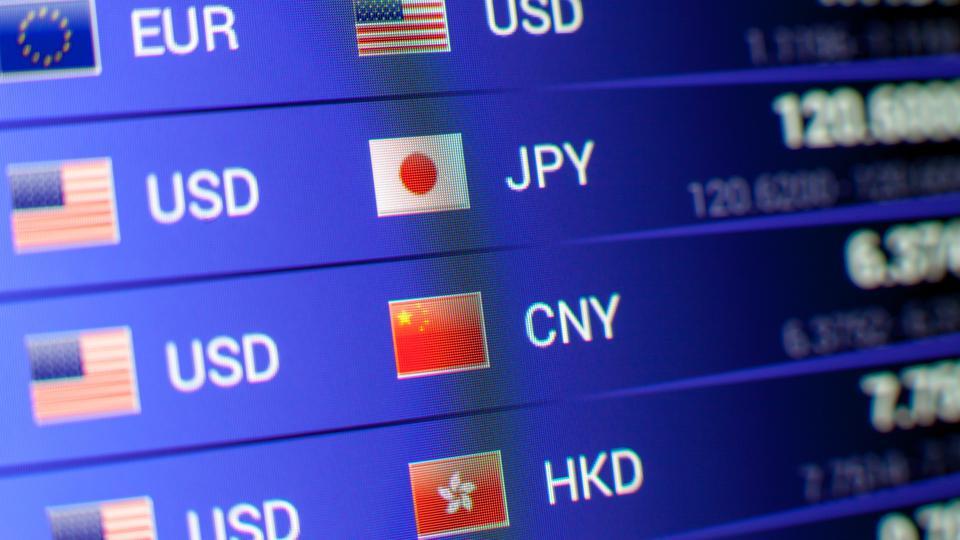
In recent months, Ghana has witnessed a remarkable surge in its national currency. The Ghanaian cedi has appreciated by 25% against the US dollar, with an impressive 7% gain recorded in May 2025, earning global recognition as the world’s best-performing currency. While this development may inspire hope, history reminds us that sudden currency appreciation is a double-edged sword. Without sustainable fundamentals, today’s gains could become tomorrow’s losses.
To understand the risks and opportunities in this moment, it is vital to compare Ghana’s current experience with historical examples—countries that either failed to sustain their currency strength or managed to build upon it. Notable among these are Argentina, a cautionary tale of short-lived appreciation, and Switzerland and Singapore, both of which demonstrate how structural stability can sustain a strong currency over time.
Argentina’s Peso (2024)
In 2024, Argentina’s peso appreciated by 44.2% in real effective exchange rate (REER) terms—the largest global currency appreciation that year. This sharp appreciation was largely driven by newly elected President Javier Milei’s economic shock therapy, which included:
· Cutting government spending by over 30%,
· Ending money printing by the central bank, and
· Securing a $20 billion IMF bailout.
Monthly inflation fell from 25.5% in Dec 2023 to 2.8% by Oct 2024, and confidence briefly returned to the Peso. Yet, by late 2024, cracks began to emerge:
· Export competitiveness declined. Beef exports fell over 20% as a stronger Peso made Argentine goods expensive abroad.
· Net foreign reserves remained negative, exposing vulnerability to external shocks.
· The economy contracted by 4.5%, reflecting the painful costs of austerity.
Analysts warned that the appreciation was speculative and could easily reverse without deep structural change.
Therefore, appreciation that stems from temporary policy shocks—rather than productivity growth and reserve accumulation—is unsustainable. If external inflows or commodity booms fade, the currency is at risk of sharp depreciation.
The Swiss Franc as a Resilient Currency
Unlike Argentina, Switzerland has long maintained a strong and stable currency, despite global volatility. The Swiss franc (CHF) has appreciated steadily over the years and remains a safe-haven currency. This is because:
· Over 50% of Swiss exports are high-tech, pharmaceutical, or precision-engineered products. Export competitiveness isn't based on price, but on quality and brand.
· Switzerland consistently runs budget surpluses or modest deficits, maintaining high investor confidence.
· The Swiss National Bank (SNB) has actively intervened when needed—such as in 2015—to prevent the franc from appreciating too rapidly.
· Swiss inflation remained near 0% to 2%, supporting consumer confidence and currency value.
In 2015, the Franc appreciated nearly 20% in a day after the SNB ended its Euro peg. Despite short-term export challenges, the Swiss economy grew 0.9% that year—a testament to its structural resilience. Hence, strong currencies can be maintained for the long-term if they’re backed by high-value exports, fiscal stability, and proactive monetary tools.
A Currency Strategy Built on Structural Policy
Singapore is another standout case. The Singapore dollar (SGD) has appreciated gradually over the decades, without hurting exports or economic growth. The reasons behind this success are:
· The Monetary Authority of Singapore (MAS) manages the SGD against a trade-weighted basket. This allows fine-tuned adjustments rather than relying on volatile interest rate changes.
· Institutions like Government of Singapore Investment Corporation (GIC) and Temasek, manage Singapore’s large foreign reserves for long-term economic stability.
· Singapore exports high-value services and goods—biotech, electronics, finance—insulated from price competition.

By aligning currency management with economic structure, Singapore has avoided the pitfalls of sudden shocks and maintained long-term appreciation with minimal volatility.
Similarly, a well-managed, exchange-rate-focused framework for Ghana, combined with diversification and sovereign wealth planning, can build a sustained currency strength.
What has driven the Ghana’s cedi appreciation?
Ghana’s recent cedi rally is driven by several key developments:
1. Surging gold production: Output projected at 5.1 million ounces in 2025, up from 4.8 million in 2024.
2. Gold-for-Oil Program: Eased pressure on forex demand by paying oil imports with gold rather than dollars.
3. Tight monetary policy: Bank of Ghana kept interest rates at 28%, attracting investor inflows and curbing inflation.
4. IMF support and fiscal reforms: IMF funds and policy discipline increased investor confidence.

Recommendations for Ghana in building sustainable currency strength
a. Diversify the economy: Develop non-traditional exports like agro-processing, digital services, and light manufacturing. Reduce dependence on gold, cocoa, and oil.
b. Establish a sovereign wealth fund: Use resource windfalls to create a long-term buffer. Invest reserves in productive assets for future generations.
c. Maintain a managed exchange rate framework: Consider a trade-weighted exchange rate system similar to Singapore’s. Use a transparent FX policy to reduce speculation and increase stability.
d. Ensure fiscal discipline: Keep debt sustainable and avoid populist spending. Maintain budget surpluses or modest deficits to avoid printing money.
Ghana’s current currency appreciation is a window of opportunity—not an end in itself. The experiences of Argentina, Switzerland, and Singapore reveal a vital truth: without structural reforms, no currency rally is permanent. If Ghana leverages its current gains to invest in resilience, it can turn the cedi’s surge into a symbol of enduring strength. But if these gains are celebrated without strategic follow-through, history may repeat itself—painfully.
Sustaining the cedi must now become a national policy priority. With momentum on our side, now is the time to implement lasting productive solutions.
Author:
Solomon Adu Sarpong
Policy Research Fellow
Institute for Liberty and Policy Innovation (ILAPI).
Image source: USD to GHS
https://www.forbes.com/advisor/money-transfer/currency-converter/usd-ghs/