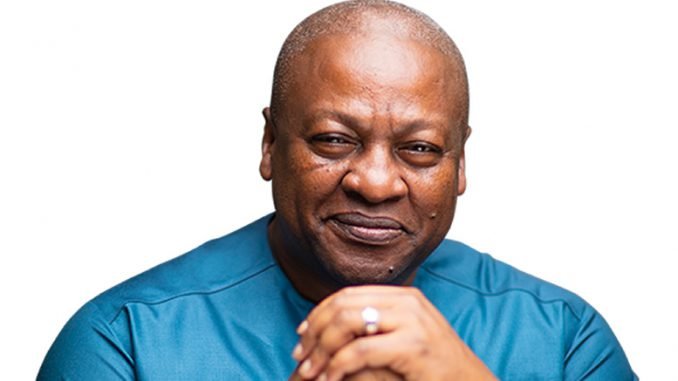
The 2024 general elections have indeed been one of the most important chapters in the democratic and socio-economic journey of Ghana. The candidate of the National Democratic Congress (NDC), John Dramani Mahama, won with a convincing mandate to reclaim the presidency he lost in 2016. His victory represents not only the will for change by Ghanaians. With solutions of prioritizing unemployment, inflation, and infrastructure deficiencies, NDC made a presentation that showed “better” insight into what the people of Ghana needed.
Reasons for NPP's Defeat
Economic Mismanagement
The New Patriotic Party (NPP0 government has ushered the country into a high economic instability characterized by high inflation and a fast-depreciating cedi. Between 2014 and 2016, inflation hovered between 15% and 19%, thus reflecting the challenges faced during the latter part of the NDC's previous administration. On the exchange rate for the same period, the cedi depreciated from approximately GHS 3.2 to USD 1 in 2014 to about GHS 4.4 to USD 1 as of the end of 2016.
These economic challenges, however, ballooned under the NPP between 2020 and 2024. Monthly inflation reached an all-time high of 54.1% in December 2022, saying, this was propelled by both global economic shocks and domestic policy missteps. It retreated to about 31.5% in the middle of 2024, but the damage to consumer purchasing power and business costs was already done.
While the cedi has equally been recording drastic depreciations from GHS 6.1 to 1 USD in 2020 to GHS 15.34 to 1 USD as of November 29, 2024, with sustained pressure on the local currency. These inflationary pressures and exchange rate volatilities hit the cost of living hard, hence raising the price of goods and services that the average Ghanaian used to enjoy at affordable prices.
This was manifested, for example, in the astronomically high rise in the prices of staples like maize, cooking oil, and transportation that stretched household budgets.
Inflation ate into real wages, reducing the level of earnings and increasing economic hardship. Enterprises, especially SMEs, found it difficult to adjust to galloping input costs and laid off some workers, thus increasing unemployment.
And many businesses, including Glovo, Jumia foods and Nivea, leaving the country due to economic hardship.
Adding to the economic strain was the controversial debt restructuring program which included "haircuts" on the domestic bondholders. This, besides all the economic costs, represents the latest phase in an effort to stabilize the ratio of debt to GDP, which had swollen above 90%. The measure witnessed the investors, pensioners, and financial institutions incur heavy losses from the policy that further destroyed confidence in the government and as individuals and businesses being faced with reduced savings and operating capital.
This cocktail of economic challenges created widespread dissatisfaction, fueling the electorate's desire for change and making the NDC's promises of diversified economic reset-focusing on agriculture, manufacturing, and creative industries-more appealing.
Meanwhile, the NDC manifesto targeted measures that would more precisely address the current economic challenges of Ghana, and this struck a chord deep within the electorate. Revitalizing agriculture appealed to the rural communities and smallholder farmers through promises of increasing productivity, access to credit, and reducing import dependency. Emphasis on manufacturing was directly related to the youth unemployment crisis, presenting it as a pathway to job creation through support for SMEs and domestic production.
Further, the creative industries as contributors to growth made them attract youthful populations, promising jobs in the music, film, and digital arts sectors, and finally recognizing their economic and cultural values.
By offering clear, actionable solutions to unemployment, inequality, and development, the NDC’s manifesto stood out as a credible and inclusive alternative to the NPP’s perceived policy disconnect.
Abandoned Projects and Government Inefficiency
Another important factor in the defeat of the NPP was its failure to complete crucial infrastructural projects that begun during the previous regime and others in its own regime, flagged off. Some projects around the country, such as that at Seglemi (Seglemi Housing project), have become a flag of the government's poorly placed priority and bad governance, with over 5,000 residential units intended to be provided on an estimated budget of over $200 million, where only millions were spent to result in an incomplete house, since the money was pocketed for private gains.
Similarly, the National Cathedral project became a controversial example of resource misallocation. From an initial estimate of US$400 million, this project consumed substantial state resources amidst economic hardship, sparking public outrage. Despite early efforts, it remains incomplete, serving as a reminder of the NPP’s inefficiencies in prioritizing critical needs over symbolic projects.
Other flagship projects under the NPP included the Agenda 111, a construction of 111 district hospitals across the country for equity access to health. This is quite an ambitious project estimated at US$1.76 billion and marked by delays and underfunding. As of 2024, many communities are still without the promised healthcare facilities, requiring $7.65 billion to complete the project. This failure further cemented the perception of mismanagement under the NPP.
Notably, there was also the Pwalugu Multipurpose Dam Project estimated at US$993 million to help in the control of floods, irrigation, and electricity provision. However, the project suffered repeated delays and escalating costs, with minimal progress made toward its completion.
Added to this, the abandonment or poor execution of such projects ran into billions of dollars of public funds wasted, further underlining governance challenges of the NPP. Probably compounding these frustrations was the accompanying economic hardship in Ghana; further diminishing the level of confidence in a government ability to deliver on its promises. The NDC therefore cashed in on such shortcomings by promising to emphasize and complete such projects, hence depicting itself as a party of delivery and responsible governance.
It is upon this that the NDC capitalized to promise completing all abandoned projects, especially in healthcare and education. For instance, the manifesto emphasized finishing abandoned E-Block schools, a key project initiated under the Mahama administration, to expand access to secondary education in underserved areas. The NDC also pledged to improve healthcare infrastructure by prioritizing stalled projects, particularly hospitals and clinics, ensuring equitable access to quality healthcare.
Policy-Grassroots Disconnect
While the NPP did champion some ambitious initiatives such as digitization and renewable energy, these policy actions often looked to have little relevance for the daily struggles of the ordinary Ghanaian. Unemployment and high cost of living were much more cogent issues at which the NPP was not very successful.
However, the manifesto of the NDC reflected grassroots concerns. Its social democratic approach to reducing economic inequality with policies such as the National Apprenticeship Programme for young people and the Women's Development Bank focused on women's empowerment in Ghana. By emphasizing practical solutions, the NDC connected with the electorate in ways the NPP could not.
Manifesto Comparison
The NPP's manifesto prioritized leveraging technology and innovation for the Fourth Industrial Revolution, promoting jobs in emerging sectors like artificial intelligence, green energy, and blockchain technologies. While visionary, this approach did little to address Ghana's immediate economic woes. Conversely, the NDC’s "Resetting Ghana" agenda provided actionable plans such as the 24-hour economy, targeted support for agriculture, and investments in manufacturing. By focusing on urgent needs such as inflation control, job creation, and infrastructure completion, the NDC manifesto was better positioned to address the prevailing challenges.
NDC's Strategic Victory
The 24-Hour Economy
It has been one very core policy in the NDC manifesto, which introduced a very radical policy, that is, the "24-hour economy" policy. This has been very instrumental in ensuring increased productivity toward creating more jobs, improving the competitiveness factor of Ghana. Although many Ghanaians could not understand how the 24-hour economy could change the fragile economic situation, Ghanaians voted for the NDC because of the arrogance of the incumbent government. The NDC government must learn from this and ensure systems work for a prosperous society.
Solomon Adu Sarpong
Volunteer, Institute for Liberty and Policy Innovation (ILAPI)
Tema