Development across Africa has long been guided by well-intentioned foreign aid and capricious economic interventions. Yet, the persistence of poverty despite these efforts suggests a need for a fresh approach, one that champions the dignity and autonomy of individuals over technocratic solutions imposed on free people by cronies.
Drawing on the frameworks presented in local regards we explore how Mali could create a prosperous society built on economic freedom and human dignity.
Argument that only when people are treated with dignity—meaning they are given control over their resources and are free to make their own decisions—seems never seen the light in Africa.
It is imperative to note that true development begins with recognizing the dignity of individuals by empowering them with autonomy over their resources and the freedom to make decisions, rather than imposing top-down solutions.
William Easterly’s critique of technocratic approaches to development, as outlined in The Tyranny of Experts, challenges the conventional wisdom that poverty can be solved by foreign experts and top-down technical solutions. He argues that these interventions often fail to address the root causes of poverty—namely, the absence of political and economic rights for the poor.
The World Bank, Easterly contends, has perpetuated this “technocratic illusion” by focusing on simple technical fixes without addressing deeper political issues.
Ghana, a relatively stable democracy in West Africa, has made significant strides in recent years. Yet, poverty and inequality persist, particularly in rural areas.
According to the World Bank’s Doing Business 2020 report, Ghana ranks 118th out of 190 economies in terms of ease of doing business—a sign that bureaucratic hurdles still hinder the ability of individuals to create and grow businesses. Ghana’s informal sector, which employs over 86% of the workforce, is a testament to the resilience and entrepreneurial spirit of its people.
However, the lack of access to formal markets, credit, and property rights keeps many trapped in subsistence-level activities.
By implementing policies that secure property rights—an area where Ghana ranks 102nd in the International Property Rights Index—and by reducing the cost of doing business, the government can empower more individuals to innovate and contribute to economic growth.
For example, granting secure land titles to smallholder farmers could dramatically increase agricultural productivity. Ghana’s cocoa sector, long the backbone of its economy, would benefit from such reforms. When farmers have ownership of their land, they are more likely to invest in it, leading to better yields and higher incomes.
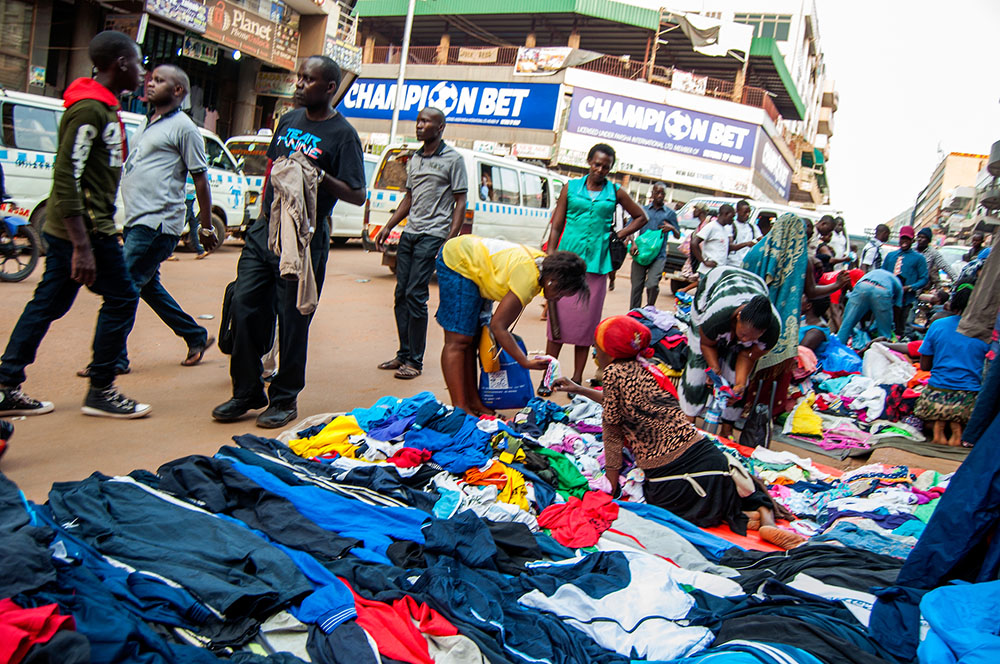
Instead, their expectance in improving their life are limited while they are free to cultivate other products. Other examples are that different state tools are less, considering the street vendors who absorb the most employment in Ghana. By forcing them to register in formal business rise state wealth but reduce their chance to become wealthy due to heavy regulations.
Mali faces a different set of challenges, as it has struggled with political instability, conflict, and weak governance. Ranked 186th on the United National Development Program’s (UNDP) Human Development Index, Mali is one of the world’s poorest countries.
Foreign aid has poured into the country with the causes of different rebellions. Southern part is well developed than northern part.
The spoken person of Azawad Liberation National Movement (MNLA) argued, the reason of our late economic development, is due to the top down solution, but Daron Acemoglu’s critique of aid in Why nation fails resonates strongly here. Mali’s dependency on aid and disoriented development policies have done little to improve the long-term well-being of its people, and in some cases, have exacerbated existing inequalities by empowering corrupt elites rather than the local population.
Mali’s agricultural sector employs more than 70% of the population. The agricultural policies are oriented to export (cotton) than focus on the second Sustainable Development Goals “No hunger”, yet much of its produce is for export markets, leaving the country reliant on food assistance Additionally, a proverb said, “empty stomach has no ears”.
This draws how the lack of human dignity approach are driven the country behind. For example, the Niger Office, a key agricultural institution, is estimated to have the capacity to produce enough rice to feed all of West Africa. Yet, Mali remains dependent on food imports.
This contradiction highlights the failure of current development policies.
The situation is further complicated by patriarchal customs that marginalize women and prevent them from owning property or becoming economically independent. Not as a full individual.
According to the 2021 Global Land Governance Index, Mali ranks poorly in terms of land tenure security, which has stifled agricultural innovation and productivity. By addressing these issues, the country could see significant economic gains.
Beside in Mali, the challenge is even greater, as conflict and instability have made it difficult for entrepreneurs to access the resources they need to succeed. Easterly argues that the solution lies in creating an environment of economic freedom, where individuals are free to pursue their own paths to prosperity without interference from corrupt governments or international donors.
Easterly’s critique of foreign aid’s failure is rooted in empirical evidence.
For instance, countries like Zambia, which have received massive amounts of aid—over 10% of national income for two decades—have stagnated economically, while countries with limited aid, like Botswana, have flourished due to strong institutions and economic freedoms.
This data reinforces the argument that rights and freedoms, not technocratic solutions, are the key to sustainable development.
By the way, the path forward for Mali, mark that the combination of insights from Development with Dignity and The Tyranny of Experts offers a powerful roadmap for Mali to achieve prosperity.
The failure of technocratic solutions has shown that development must come from within—and with the right policies in place, Mali can lead the way in creating a more prosperous and dignified future for their citizens.
Cheick A. K. Diara
Research Intern
ILAPI - Ghana
Image source:
https://www.ncronline.org/earthbeat/justice/used-clothing-imports-africa-strain-local-ecosystems-waste-management