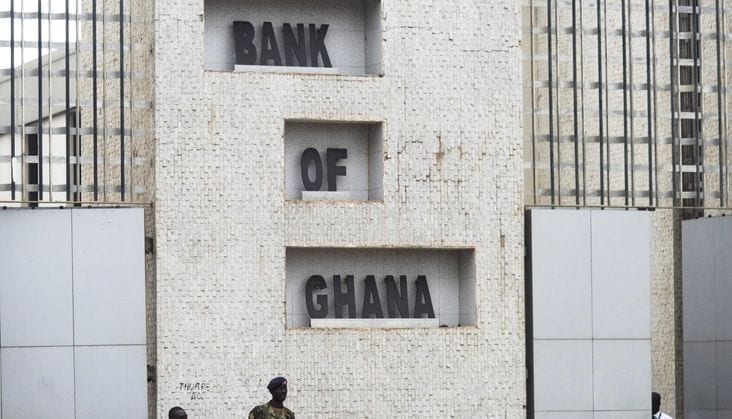
The Bank of Ghana (BoG) on 27th August 2024, released a notice to the public on ‘The Concept of “Next of Kin” in Bank Account Operations. This absolutely commendable in educating the public about financial matters, particularly in clarifying the role of a "next of kin" on financial legal documents. Through its public education initiatives, the Bank has demystified a common misconception that being designated as a next of kin automatically entitles one to inherit funds from a deceased person’s bank account. This effort is crucial as it helps to reduce potential family conflicts and legal disputes that arise from misunderstandings regarding inheritance rights.
However, while the BoG deserves acknowledgment for these educational efforts, it faces significant criticism for its lack of transparency and accountability concerning the management of funds from dormant accounts.
It is vital that the BoG should not only educate the public on financial matters especially on the concept of the next of kin but also provides clear, accountable guidelines on how dormant account funds are utilized, and consider mechanisms to redirect these funds to rightful beneficiaries as a means to alleviate poverty.
The Bank of Ghana's initiative to clarify that a next of kin does not automatically become a beneficiary is a significant step in financial literacy. This clarification is essential because it dispels the long-held belief that naming someone as a next of kin on a bank account is equivalent to designating them as the sole heir to the funds within that account.
Prior, this misconception has being clarified in ILAPI's 2023 Policy Brief and Report on Removing Barriers to Prosperity to End family Poverty which the BoG was engaged. A copy of the Report was given to the BoG to study. We believe this has necessitated its release to the public to clarify the importance of next of kin.
Notwithstanding, the BoG's educational campaigns to ensure that individuals understand that inheritance laws governing the distribution of a deceased person's assets, and that being a next of kin is simply an administrative convenience for the banks, rather than a legal claim to the deceased's assets is of a high importance.
However, despite the education and creation of public awareness, the Bank of Ghana has been less forthcoming about what happens to funds in dormant accounts (individual accounts that have seen no activity for a prolonged period, particularly after 5 years) when they are transferred to the central bank. The lack of transparency regarding the use and management of these funds raise concerns about the BoG's commitment to accountability.
The dormant accounts can accumulate substantial amounts of money over time, and the public deserves to know how these funds are being utilized. Are they held in trust for potential claimants, or are they being redirected for other purposes? The BoG's silence on this issue undermines public trust and raises ethical questions about the stewardship of these funds.
The BoG's current practice appears to involve holding these funds indefinitely, with little to no public information dormant accounts. This approach is problematic because it deprives potential rightful beneficiaries of access to funds that could significantly improve their living conditions, take them out of poverty, particularly in a country where poverty remains a pressing issue.
The BoG's lack of clarity on this matter suggests a missed opportunity to use these dormant funds in a socially responsible way that could have measurable impacts on reducing poverty.
To address this issue, the BoG should adopt a more proactive approach in handling dormant accounts.
After receiving the funds from dormant accounts from primary banks, the BoG should implement a rigorous process to identify and locate the rightful beneficiaries. This process could involve a thorough investigation over a short period, during which time the BoG would work with relevant agencies, including the Registrar of Births and Deaths, to trace family members and determine the legitimate heirs to take families out of poverty.
If, after this period, no rightful beneficiary can be identified or located, the BoG could consider redirecting these funds towards social welfare programs aimed at poverty alleviation.
This approach would not only ensure that the funds are used in a manner that benefits society but also reinforce the BoG's role as a responsible and ethical steward of public funds.
Moreover, the BoG should regularly publish reports on the status of dormant accounts, detailing the total amount of funds held, the efforts made to locate rightful beneficiaries, and the eventual use of these funds as part of its annual reports.
Such transparency would build public trust and demonstrate the BoG's commitment to accountability and social responsibility.
While the Bank of Ghana has made significant contributions to public financial education, particularly regarding the role of a next of kin, it must do more to ensure transparency and accountability in the management of dormant account funds.
By adopting a clear, accountable process for handling these funds and making efforts to identify and locate rightful beneficiaries, the BoG can use these funds to make a meaningful impact on poverty reduction in Ghana. This approach would not only enhance the BoG's reputation but also ensure that dormant funds are used in a manner that benefits society as a whole for poverty reduction and national development.
Stephen Dansu
Head of Research, ILAPI
Tema.